
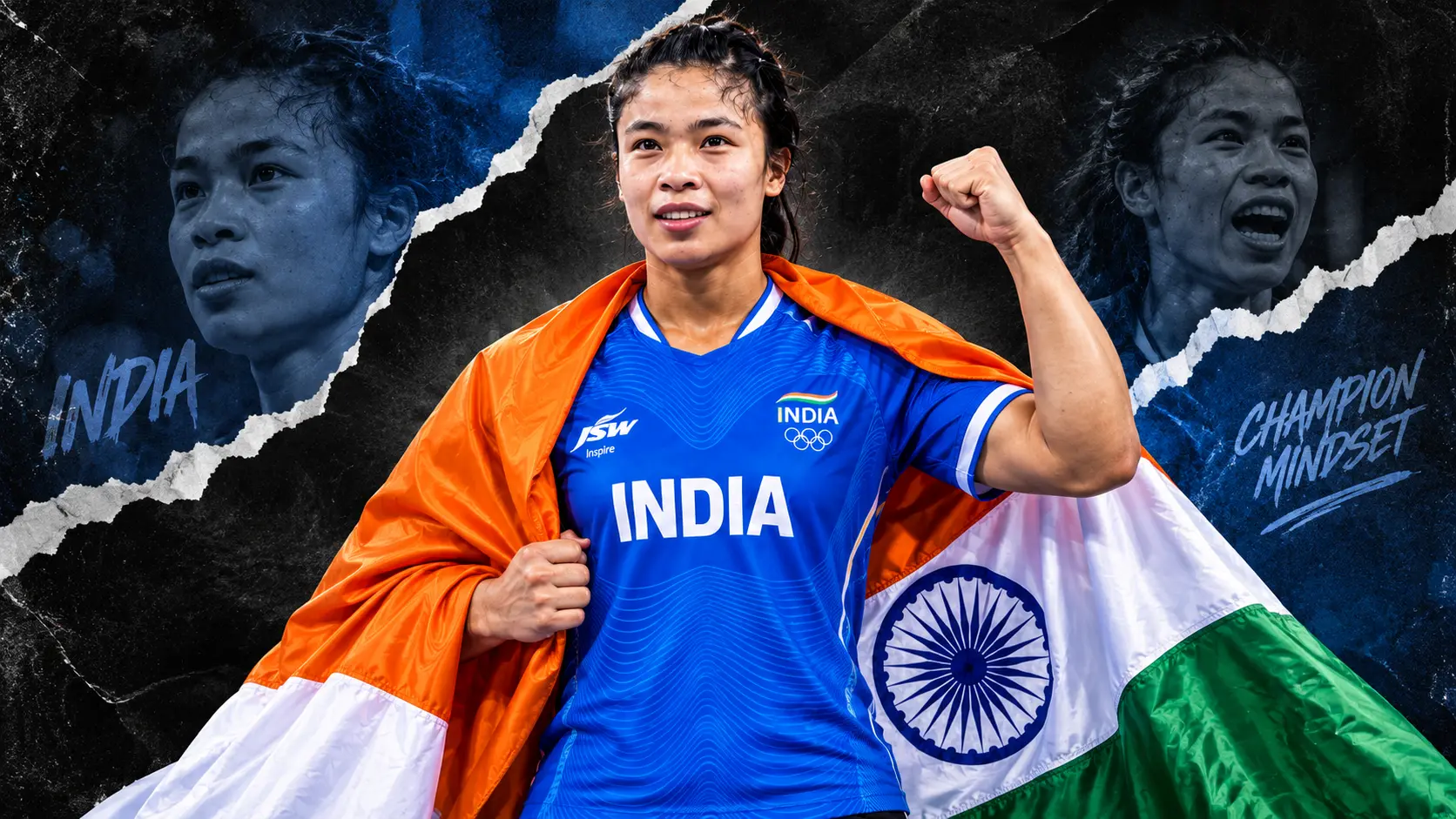
Roshibina Devi won silver in women’s 60kg sanda at the Asian Games 2026, taking her medal tally across three consecutive editions to two silvers and a bronze. The 25-year-old from Manipur had previously reached the podium in Jakarta in 2018 and Hangzhou in 2023. Here is how she earned each medal, the opponents she faced and a simple explanation of the wushu event she competes in.
Her latest silver came in Aichi-Nagoya, Japan, on September 24. Roshibina is now the first Indian wushu athlete to win a medal at three consecutive Asian Games.
How Roshibina Devi won silver in 2026
Roshibina faced China’s Zhang Xiaoyu in the women’s 60kg sanda final. Zhang won 2-0, leaving the Indian with silver for the second successive edition.
According to UNI’s report, Zhang took both rounds, with the judges returning a 5-0 decision in each. The overall result was a two-round victory for Zhang.
Roshibina had won three bouts to reach the final. She started by beating Bangladesh’s Shika Khatun in the round of 16 on September 21, then defeated Macao’s Chu Man Sin in the quarter-final the following day. Both victories came by point difference.
The quarter-final win secured at least bronze because both losing semi-finalists receive medals in this event. Roshibina then improved her guaranteed medal to silver by beating Indonesia’s Thania Kusumaningtyas 2-0 in the semi-final on September 23.
Her defeat in the final ended her gold-medal challenge, but she had matched her best finish from Hangzhou.
Roshibina Devi’s three Asian Games medals
All three medals came in the same event: women’s 60kg sanda. Her first was a bronze, followed by two silver medals.
| Competition year | Host | Medal | Last opponent and stage |
|---|---|---|---|
| 2018 | Jakarta, Indonesia | Bronze | Cai Yingying of China, semi-final |
| 2023 | Hangzhou, China | Silver | Wu Xiaowei of China, final |
| 2026 | Aichi-Nagoya, Japan | Silver | Zhang Xiaoyu of China, final |
The Hangzhou edition retained the Asian Games 2022 name, although its competitions took place in 2023. That is why her first silver appears under 2022 in some records and 2023 in reports describing when she won it.
2018: Bronze on her Asian Games debut
Roshibina was 17 when she competed at the Jakarta Asian Games. Her route to a first medal began with a quarter-final against Pakistan’s Mubashra Akhtar on August 21, 2018.
She won that bout 2-0 to reach the semi-finals and secure a place on the podium. Winning the quarter-final mattered because there was no separate contest for bronze between the two losing semi-finalists.
In the semi-final on August 22, Roshibina faced China’s Cai Yingying. The official results record Cai’s victory by point difference, ending Roshibina’s chances of reaching the final.
Roshibina finished with bronze, sharing that medal position with Thailand’s Suchaya Bualuang. Cai went on to win gold.
That first campaign took Roshibina as far as the semi-finals. At the next Asian Games, she would go one round further.
2023: First silver in Hangzhou
Roshibina returned to the Asian Games in Hangzhou, China, and competed at the Xiaoshan Guali Sports Centre. This time, she won two bouts to reach the final.
Her opening opponent was Kazakhstan’s Aiman Karshyga in the quarter-final on September 25, 2023. Roshibina won by point difference, which again guaranteed her at least bronze.
The important step came in the semi-final on September 27. Facing Vietnam’s Nguyen Thi Thu Thuy, Roshibina won 2-0 to reach her first Asian Games final. She had already improved on her Jakarta result before the gold-medal bout began.
China’s Wu Xiaowei was her opponent in the final on September 28. Wu won 2-0, and Roshibina finished with silver.
Her progression was clear: a semi-final finish in 2018, followed by a final appearance in 2023. The 2026 silver has now given her back-to-back final appearances in the same weight category.
Where is Roshibina Devi from, and how old is she?
Her full name is Naorem Roshibina Devi. She comes from Kwasiphai Mayai Leikai in the Bishnupur district of Manipur.
Born on December 30, 2000, she was 25 when she won her latest Asian Games silver on September 24, 2026. She will turn 26 in December.
Roshibina comes from a farming family. In an interview reported by The Indian Express in 2023, she explained that watching a district-level competition sparked her interest in wushu. She had tried boxing but found herself drawn to wushu.
She has trained at the Sports Authority of India centre in Imphal under coach Maibam Premkumar Singh. Her three Asian Games podium finishes have all come in sanda, the fighting discipline of the sport.
What is wushu, and how does sanda work?
Wushu is a martial art and competitive sport with roots in China. Its two main competition disciplines are sanda and taolu.
- Sanda: Two athletes fight each other using permitted punches, kicks and throws. Roshibina competes in this discipline, in the women’s 60kg weight category.
- Taolu: Athletes perform planned routines. Judges assess their movements, overall performance and difficulty, rather than deciding the winner of a fight.
In sanda, a standard bout is the best of three rounds. Each round lasts two minutes, with a one-minute break between rounds. A fighter who wins two rounds wins the bout, so a 2-0 result means a third round is unnecessary.
Athletes compete on a raised platform called a leitai and wear protective equipment, including gloves, head protection and a chest protector. Judges award points for successful scoring techniques.
Under International Wushu Federation rules, a fighter can also win early if all five sideline judges confirm a scoring lead of at least 12 points. This is known as a win by point difference.