
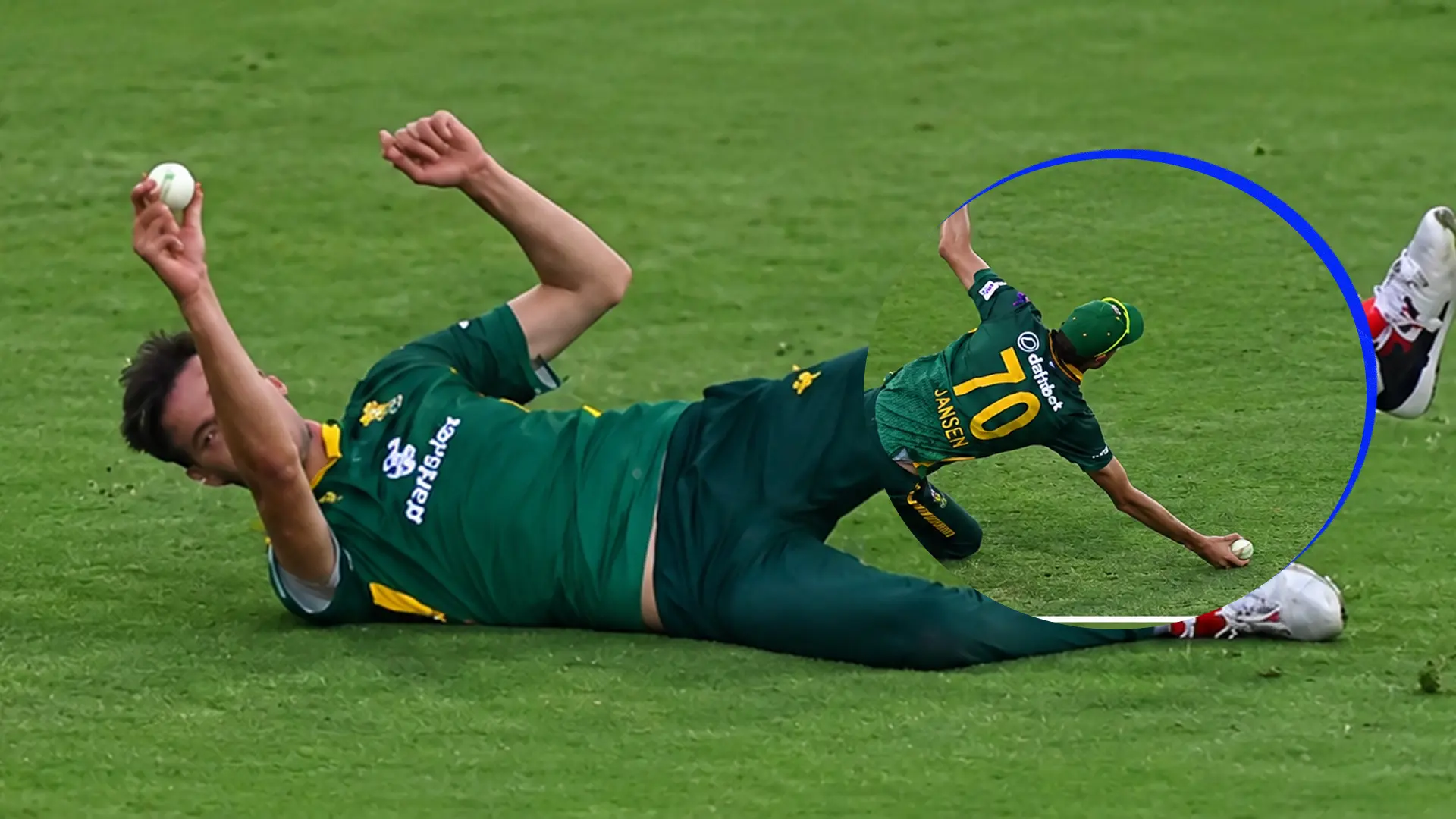
Marco Jansen’s one-handed catch against Australia takes the first spot in our top 5 best catches in cricket. From his diving effort in Durban to Suryakumar Yadav’s boundary catch in a World Cup final, these five moments show how speed, timing and control can turn a difficult chance into a wicket.
This is SportzClaus’s selection, based on the difficulty of the catch, the skill involved and the match situation. Fans will have their own favourites, but each of these five deserves another look.
Top 5 best catches in cricket at a glance
| Rank | Fielder | Batter dismissed | Match | Date |
|---|---|---|---|---|
| 1 | Marco Jansen | Matt Renshaw | South Africa vs Australia, first ODI, Durban | 24 September 2026 |
| 2 | Suryakumar Yadav | David Miller | India vs South Africa, T20 World Cup final, Barbados | 29 June 2024 |
| 3 | Ben Stokes | Andile Phehlukwayo | England vs South Africa, ODI World Cup, The Oval | 30 May 2019 |
| 4 | Trent Boult | Kieron Pollard | West Indies vs New Zealand, second T20I, Roseau | 6 July 2014 |
| 5 | Paul Collingwood | Matthew Hayden | England vs Australia, NatWest Series ODI, Bristol | 19 June 2005 |
1. Marco Jansen’s one-handed catch against Australia
Marco Jansen gave South Africa a moment to remember during the first ODI against Australia at Kingsmead, Durban, on 24 September 2026. Matt Renshaw was the batter dismissed, but it was the way Jansen held the ball that made this catch special.
On the second ball of the 37th over, Renshaw pulled a short delivery from Gerald Coetzee into the outfield. Jansen covered the ground, dived to his right and reached out with one hand as the ball dropped towards the grass.
He caught it between his right thumb and index finger, keeping it off the ground as he landed. Renshaw was out for 44 from 49 balls, and Australia lost their seventh wicket at 215.
There were two difficult parts to the effort. First, Jansen had to get close enough to a ball falling away from him. Then he had to keep hold of it through the landing, with very little room between his hand and the turf.
That combination puts him at No. 1 in our selection. A full-length dive is spectacular on its own, but the control at the end is what makes this catch worth replaying.
Dale Steyn’s reaction and South Africa’s win
Dale Steyn praised Jansen on X, writing: “Marco Jansen has the best hands in cricket.”
Jansen had also scored 75 from 59 balls as South Africa reached 297/8. Australia were bowled out for 230, giving the hosts a 67-run win.
His catch removed a batter who was still keeping the chase alive. It was an outstanding individual moment within an important all-round contribution.
2. Suryakumar Yadav’s catch in the 2024 T20 World Cup final
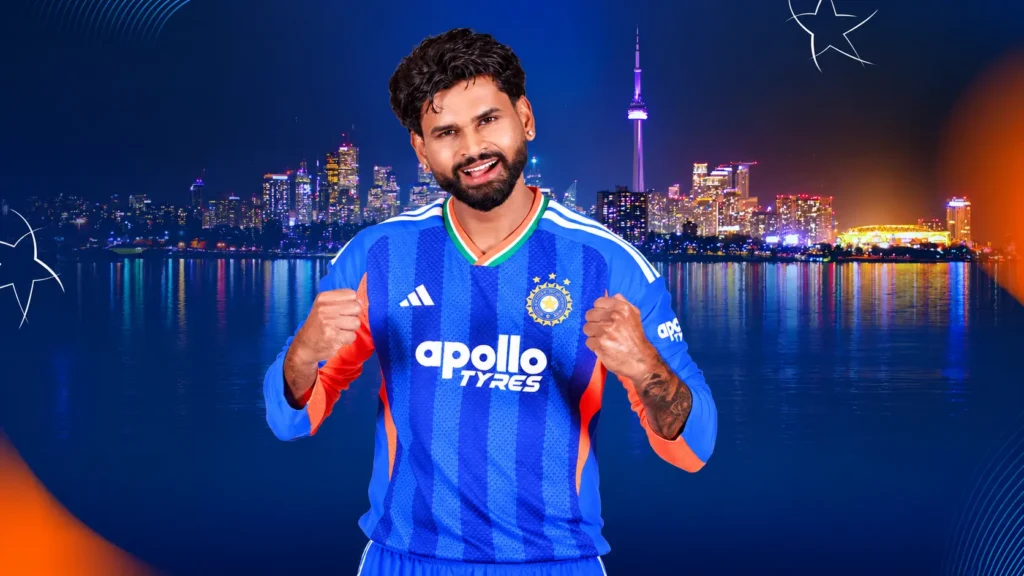
Suryakumar Yadav’s catch to dismiss David Miller came with a World Cup title still at stake. South Africa needed 16 runs from the final six balls against India in Barbados on 29 June 2024.
Miller hit Hardik Pandya’s first delivery of the over towards long-off. Suryakumar reached the ball close to the boundary and caught it, but his momentum was taking him outside the field.
He released the ball into the air before stepping beyond the rope, then returned inside to complete the catch. Miller departed for 21, and India eventually won by seven runs.
What stands out is the sequence of decisions. Suryakumar had to reach the ball, judge the boundary, let go at the right moment and gather it again. Holding on to the first catch without controlling his movement would not have been enough.
The situation adds to its place in this list. India still had to finish the over, but removing Miller with five balls remaining was a major step towards lifting the trophy.
3. Ben Stokes’ flying catch at the 2019 World Cup
Ben Stokes produced a remarkable one-handed catch in the opening match of the 2019 ODI World Cup. England were facing South Africa at The Oval on 30 May when Andile Phehlukwayo swept Adil Rashid towards deep midwicket.
Stokes had positioned himself further inside the boundary than he wanted. As the ball travelled over him, he adjusted, jumped backwards and stretched his right arm above his head to take it.
Phehlukwayo was dismissed for 24 from 25 balls. A shot that had gone beyond the fielder’s initial position ended with the ball in his hand.
The recovery makes this catch stand out. Stokes did not have the comfort of waiting underneath the ball. He had to change his position while judging its flight, then hold it through the fall.
He later acknowledged that he had been too far in from the rope. That detail helps explain why the final leap looked so difficult.
England won by 104 runs, with Stokes also contributing 89 runs and two wickets. The catch remains a striking example of how a fielder can recover from an imperfect starting position.
4. Trent Boult’s boundary catch to dismiss Kieron Pollard
Trent Boult’s effort against West Indies belongs in this list because the first grab was only half the job. It came in the second T20I at Windsor Park in Roseau on 6 July 2014.
Kieron Pollard hit Corey Anderson towards the boundary. Moving backwards, Boult reached up with his right hand and caught the ball, but he could not stop himself from going beyond the rope.
He threw it back into the air before crossing the boundary, then dived back into the field to complete the catch. Pollard was dismissed for 13 from 12 balls.
Boult had to control both where he sent the ball and how quickly he could get back to it. A throw too far away, or too low, would have left him unable to finish the dismissal.
The catch was accepted under the boundary rules in force at the time. It is best understood in that historical context, rather than treated as a guide to every boundary-catch ruling today.
West Indies still won the match by 39 runs. Boult’s place here comes from the skill of the catch, even though it did not produce a winning result for New Zealand.
5. Paul Collingwood’s leap to catch Matthew Hayden
Paul Collingwood’s catch against Australia at Bristol on 19 June 2005 shows why close fielding can be just as spectacular as a boundary effort.
Matthew Hayden cut Steve Harmison towards backward point, a position on the off side behind square. Collingwood sprang upwards and stretched his right hand above his head to catch a ball that appeared to be passing over him.
Hayden was dismissed for 31 from 44 balls, leaving Australia at 63/4. England later won the NatWest Series match by three wickets.
There was no long run or second attempt here. Collingwood had a brief moment to react to the shot, get off the ground and put one hand in its path.
That is what earns him the final place in our top five. Jansen’s catch demanded a diving finish near the turf, while Collingwood’s required height and a quick reaction much closer to the bat. Both turned a very difficult chance into a clean dismissal.
Read next on SportzClaus