

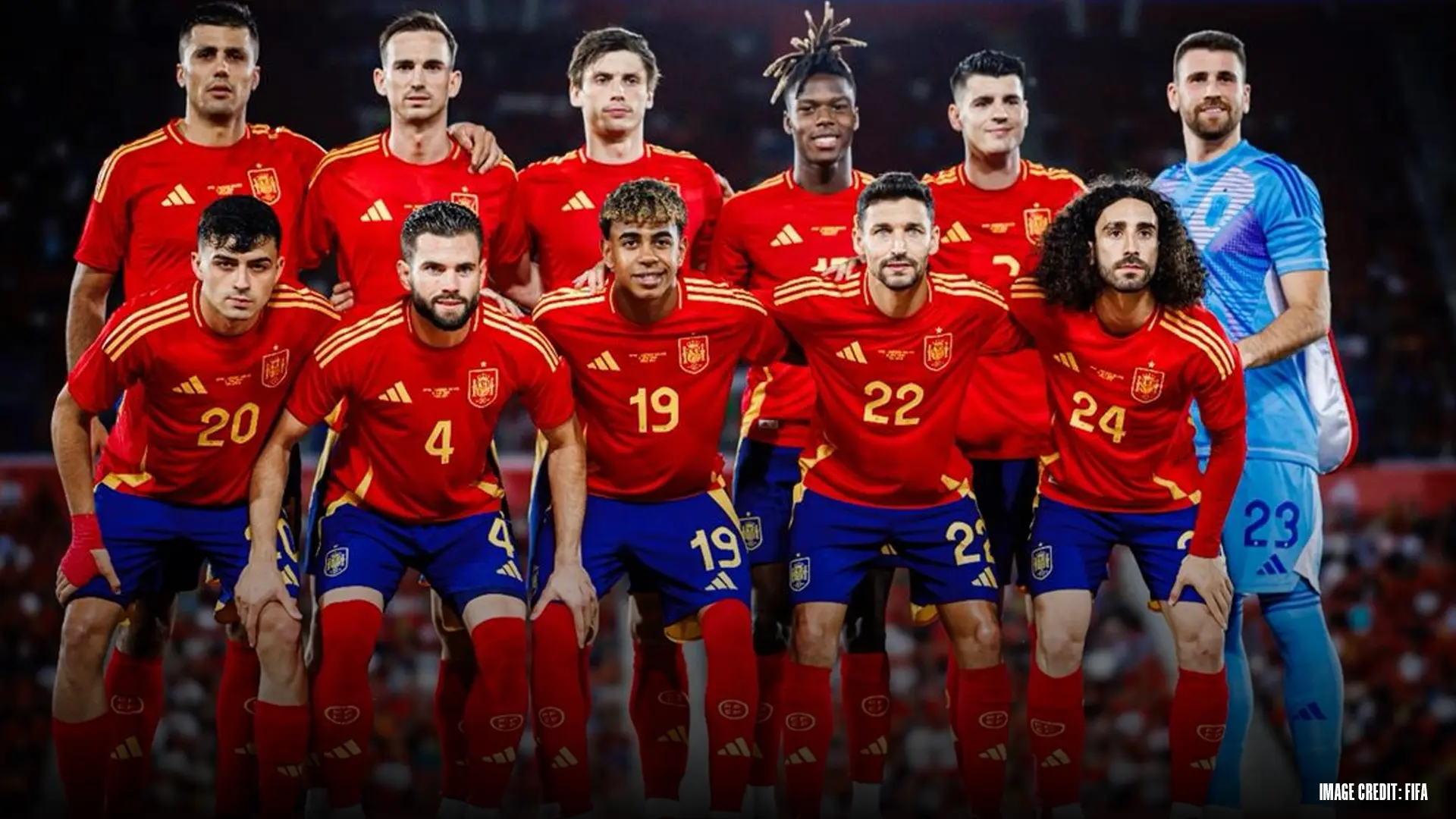
The FIFA World Cup 2026 arrives this summer as the most expanded, bloated, and fiercely contested edition the sport has ever seen. For the first time, 48 nations will descend on North America, spread across three co-host countries: the United States, Canada, and Mexico. That means 104 matches, 16 groups, and an entirely new knockout bracket that blows the tournament wide open.
The opening match kicks off on 11 June 2026. The final is set for MetLife Stadium in New Jersey on 19 July. Over five chaotic weeks, the globe stops.
Five genuine heavyweights have a real shout at lifting the trophy. Here is how they stack up.
5. Brazil
They haven’t won a World Cup since 2002. Twenty-four years of hurt for the country that views football as a birthright. That barren run should probably disqualify them from the top tier of contenders, yet the predictors always give them a look in.
There is a raw, terrifying pace on this side. Vinícius Jr. and the teenage sensation Endrick give the Seleção a frightening capacity to dismantle any low block. Carlo Ancelotti is at the helm now, bringing a legendary Champions League pedigree. International football is a different beast, though, and the tactical transition has looked clunky at times.
Former France defender Frank Leboeuf noted recently that Brazil’s comfort in the sweltering North American summer heat could give them a massive physical edge over their European counterparts. He might be right. But we have been having this same optimistic Brazil conversation for two decades, and it usually ends in a quarter-final collapse.
4. Argentina
Nobody defends the World Cup. It is a modern footballing truism. No country has achieved back-to-back global titles in over 80 years, a historic weight hanging over Lionel Scaloni’s Argentina squad.
Yet, the reigning champions do not look like a team ready to relinquish their crown. Julian Alvarez, Lautaro Martinez, and Lionel Messi have plundered 167 international goals between them. Alvarez is a much more complete forward than he was four years ago, and Martinez arrives in pristine physical shape compared to his limping form in Qatar.
READ ALSO: 5 Biggest Weaknesses That Could Stop Argentina From Retaining FIFA World Cup
Then there is Messi. At 37, he is visibly pacing himself, picking his moments to strike. Statistics cannot capture the sheer gravity he exerts on a pitch; his presence alone reshapes how opposition managers set up their defensive lines. Scaloni has forged a collective identity that refuses to break. They are street-smart, stubborn, and brutal on the counter-attack. Hard to beat, definitely. Unstoppable? No.
3. England
This might actually be the year. Seriously.
Gareth Southgate is gone, and Thomas Tuchel inherits arguably the most balanced, talent-stuffed England squad since 1966. Harry Kane leads the line after a ridiculous debut season for Bayern Munich, banging in 64 goals in 56 matches across all competitions. He is elite, fit, and desperate for a career-defining trophy.
England’s current tournament status sees them sitting as third favourites behind Spain and France. Declan Rice and Bukayo Saka shoulder the main creative burden in midfield, while a solid defensive spine anchored by John Stones and Marc Guéhi provides genuine structural rigour.
The tactical pieces are on the board, and the price feels fair. The issue is entirely psychological. England bottle big nights. They did it in Moscow, they did it at Wembley, and they did it in Al Khor. Breaking that generational curse is the only thing that actually matters when the tournament hits the business end.
2. France
On paper, this is an absurdity. France boast a squad valued at a staggering £1.3 billion, a number driven by Kylian Mbappé, Michael Olise, Désiré Doué, Rayan Cherki, and William Saliba. The conveyor belt of world-class talent coming out of Clairefontaine just does not stop.
Didier Deschamps knows how to navigate these tournaments. He took them to the final in 2022, only losing on penalties after that absurd showpiece against Argentina. The French squad depth means they can lose three world-class starters to injury and replace them without dropping a yard of pace.
Prediction models keep swapping France and Spain at the top of the market, giving both a win probability north of 10%. But France is always a volatile stock. Camp ego, squad friction, and sudden tactical passivity have plagued them in the past. If the dressing room holds together, they can overpower anyone on the planet. If the ego clashes start early, they could easily unravel before the semi-finals.
1. Spain
Spain sits at the top of the pile, and they deserve to be there. Luis de la Fuente has built a machine that makes opposing managers sweat. Their positional play is relentless, their high press suffocating, and they control matches with an arrogance that relies on collective movement rather than an orthodox, elite number nine. This group is young, cohesive, and already knows how to win trophies together.
The Major Issue: Lamine Yamal’s fitness hangs over the entire campaign. Barcelona’s teenage phenom missed the domestic run-in with a muscular tear, and reports suggest his minutes will be strictly managed during the group stage.
Without Yamal stretching the pitch on the right flank, Spain lose the chaotic, unpredictable dimension that makes them truly frightening. If he gets fit for the knockout rounds, this team has the clearest identity and the most consistent tournament form in world football. It is incredibly difficult to look past them.
Based on squad depth, recent form, and tournament pedigree, the top 5 favorites are: 1. Spain, 2. France, 3. England, 4. Argentina, and 5. Brazil. Spain lead the pack under Luis de la Fuente with a suffocating high press and relentless positional play.
Spain top the favorites list thanks to Luis de la Fuente’s system built around relentless positional play and a suffocating high press. The key concern is Lamine Yamal’s fitness after a muscular tear — but as the article notes, if he gets fit for the knockout rounds, this team has the clearest identity in world football.
The FIFA World Cup 2026 final is on July 19, 2026 at MetLife Stadium in New Jersey. The tournament opens on June 11, 2026 with 48 nations competing across venues in the USA, Canada, and Mexico.
Argentina are ranked 4th in our favorites list. Álvarez, Martínez, and Messi have combined for 167 international goals — a frightening attacking trio. However, history is against them: no team has won back-to-back World Cups in over 80 years, and as the article warns, nobody defends the World Cup.


[…] LatestWorld Cup 2026 Dark Horses: 5 Teams That Could Shock the PlanetLatestFIFA World Cup 2026 Favorites: 5 Top Contenders RankedLatestECricket Game: Release Date, Features, Graphics, Gameplay and Mobile CompatibilityLatest5 […]
[…] READ ALSO: FIFA World Cup 2026 Favorites: 5 Top Contenders Ranked […]
[…] READ ALSO: FIFA World Cup 2026 Favorites: 5 Top Contenders Ranked […]