

The 2026 FIFA World Cup is unlike anything the sport has staged before. Running from 11 June to 19 July, the tournament spreads across three host nations, the United States, Canada, and Mexico, with 16 cities involved and 104 matches scheduled across the whole competition. That opening fixture? Mexico against South Africa at the iconic Estadio Azteca in Mexico City, a venue that has now hosted World Cup football across three separate tournaments. The final takes place at MetLife Stadium in New Jersey.
Here’s what makes this edition genuinely different for casual fans and seasoned supporters alike: 48 teams compete instead of the usual 32. FIFA expanded the field, which means the tournament now features 12 groups of four teams each, with the top two from every group advancing automatically to a brand-new round of 32. The eight best third-place finishers also qualify, giving more nations a real shot at making noise past the group stage. More teams, more matches, more opportunities for chaos. And the 2026 World Cup’s dark horses have never had a wider door left open for them.
Every World Cup produces at least one team that arrives quietly and leaves with the tournament’s most dramatic storyline. Morocco did it at Qatar 2022, reaching the semi-finals as the continent’s first-ever representative to do so. South Korea stunned the world in 2002. Bulgaria reached the last four in 1994. So which sides carry that energy this summer? These five teams deserve serious attention.
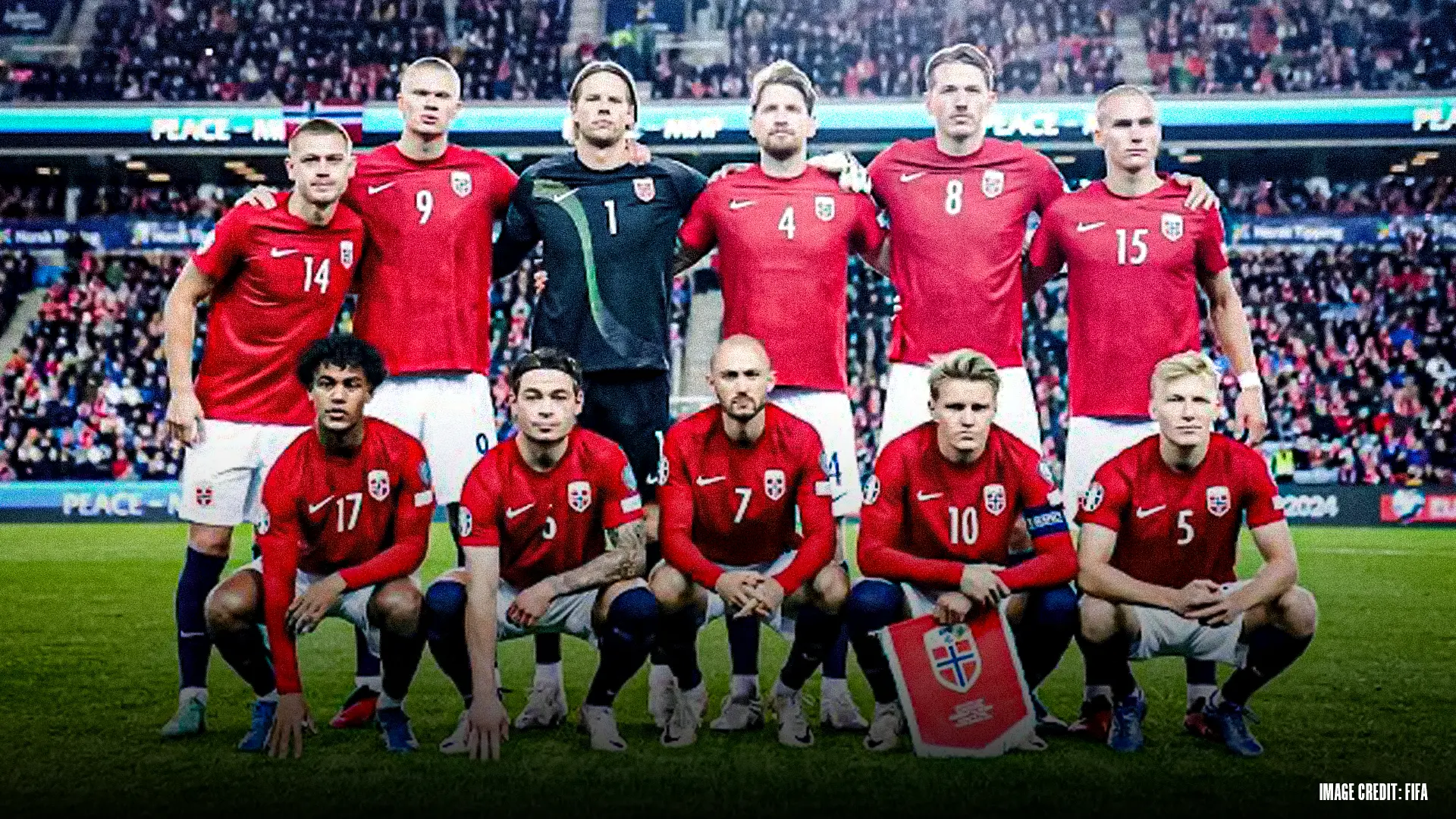
1. Norway — The 28-Year Wait Ends With Erling Haaland
Norway haven’t been at a World Cup since 1998. That’s a long time. But their return to the tournament this summer doesn’t feel like a sentimental comeback story; it feels like a genuine threat. They dominated their qualifying group, which included Italy, and went unbeaten throughout the entire qualifying process. That’s not a fluke. That’s a statement.
Erling Haaland leads the attack, obviously, and his goal record at club level for Manchester City speaks for itself. Norway are making their first World Cup appearance since 1998 and carry what many observers describe as something of a golden generation. Martin Ødegaard captains Arsenal and orchestrated their Premier League title charge this past season. Behind those two, there’s genuine depth in midfield and defensively.
The concern, as Fox Sports’ analysts note, is whether Norway have enough beyond Haaland if they want to truly compete deep into the tournament. It’s a fair point. But they land in Group I with Iraq, Senegal, and France. If they can get out of that group, which they absolutely can, the draw opens up considerably. Don’t dismiss them.
2. Japan — Arguably Asia’s Best-Ever World Cup Squad
Japan lost just once in 16 qualifying matches. Beyond those qualifying numbers, there’s a growing sense that this squad is built for the big stage, bolstered by historic friendly victories against both Brazil and England (a historic 1-0 win at Wembley) in the build-up period. For anyone who watches Asian football closely, this Samurai Blue generation feels genuinely different.
The loss of Kaoru Mitoma to injury stings. He’s one of the most direct wingers in Europe, and Brighton supporters know exactly what his absence costs a side. But Takefusa Kubo and Kaishu Sano can fill that void, and the squad carries real technical quality across the pitch.
Japan sit in Group F alongside the Netherlands, Sweden, and Tunisia. Toppling that group lands them in a more manageable section of the bracket. They’ve never made it past the round of 16, but the tools to break that ceiling are genuinely there this time. This team play quick, high-press football, absorbs pressure intelligently, and rarely gives goals away cheaply. Watch them.
3. Morocco — Ruthless, Organised, and Fuelled by Injustice
Morocco reached the semi-finals at Qatar 2022. So calling them a dark horse feels almost unfair, except that they’ve changed manager, their camp carries some turbulence after a chaotic AFCON cycle, and nobody outside Africa is quite sure which version of Morocco turns up in North America. Walid Regragui stepped down in March and was promptly replaced by Mohamed Ouahbi, who did great things at the youth level (leading the under-20 side to a world title) but arrives at the senior stage with no previous experience at this level.
READ ALSO: FIFA World Cup 2026 Favorites: 5 Top Contenders Ranked
That is a concern. It genuinely is. But look at the squad. Achraf Hakimi leads a technically gifted group that includes Bilal El Khannouss, Ismail Saibari, and Brahim Diaz, making Morocco an attractive side full of creative footballers. New coach Ouahbi switched Morocco to a more progressive 4-2-3-1 system, seeking to exploit the squad’s wealth of attacking-midfield talent, which suggests he isn’t content to simply park the bus the way his predecessor often did. Their Group C draw, Brazil, Haiti, Scotland, is manageable. Get out of that, and things get interesting very quickly.
4. Colombia — The Most Entertaining Side Nobody’s Talking About
Here’s the honest truth about Colombia: they’re not being discussed enough. They’re almost guaranteed to be a great watch, given their abundance of maverick attacking talent, a side boasting James Rodríguez, Juan Fernando Quintero, and Luis Díaz. James Rodríguez, now 34, still reads the game brilliantly and controls tempo in a way that younger playmakers haven’t yet matched. Luis Díaz at Liverpool and Bayern Munich has grown into one of the Premier League’s and Bundesliga’s most dangerous wingers. Quintero, when fit and focused, is one of South America’s most unpredictable players.
Colombia are in Group K alongside Portugal, DR Congo, and Uzbekistan. Portugal will fancy themselves, but Colombia aren’t a side that rolls over against anyone. If they advance, and they should, a deep run in the knockout stages looks plausible, not fanciful. They qualified through CONMEBOL, South America’s notoriously brutal qualification process. Nobody arrives at a World Cup soft after surviving that.
5. Turkey — The Eternal Dark Horse Who Might Finally Deliver
Would it even be a major tournament without Turkey being touted as dark horses? They rarely live up to the billing, but they don’t lack exciting talent. This time, though, there’s a genuine case that their squad is younger, sharper, and better-constructed than any Turkish team in recent memory. Real Madrid’s Arda Güler and Juventus’ Kenan Yıldız lead the youthful core; neither of them was alive the last time Turkey competed at a World Cup, while Hakan Çalhanoğlu provides the midfield experience and leadership.
READ ALSO: 5 Biggest Weaknesses That Could Stop Argentina From Retaining FIFA World Cup
Turkey land in Group D with the United States, Paraguay, and Australia. The USA look primed to feel the weight of home expectation, while Paraguay weren’t especially convincing during qualifying. Topping that group is achievable. Get through it, and the bracket potentially offers Austria and then Belgium, sides that elite teams rarely fear but dark horses can absolutely beat on a good night. Turkey’s issue has always been inconsistency. But with this much young talent firing at the same time, the stars might just align.
The expanded 48-team format of the 2026 World Cup is giving outsiders more opportunity than any previous edition of the tournament. An extra round, a wider bracket, and a wider spread of competitive nations mean the quarter-finals could look very different to what the bookmakers currently expect. One of these five sides will almost certainly cause a significant upset. The only question is how far the shock runs.

[…] READ ALSO: World Cup 2026 Dark Horses: 5 Teams That Could Shock the Planet […]